
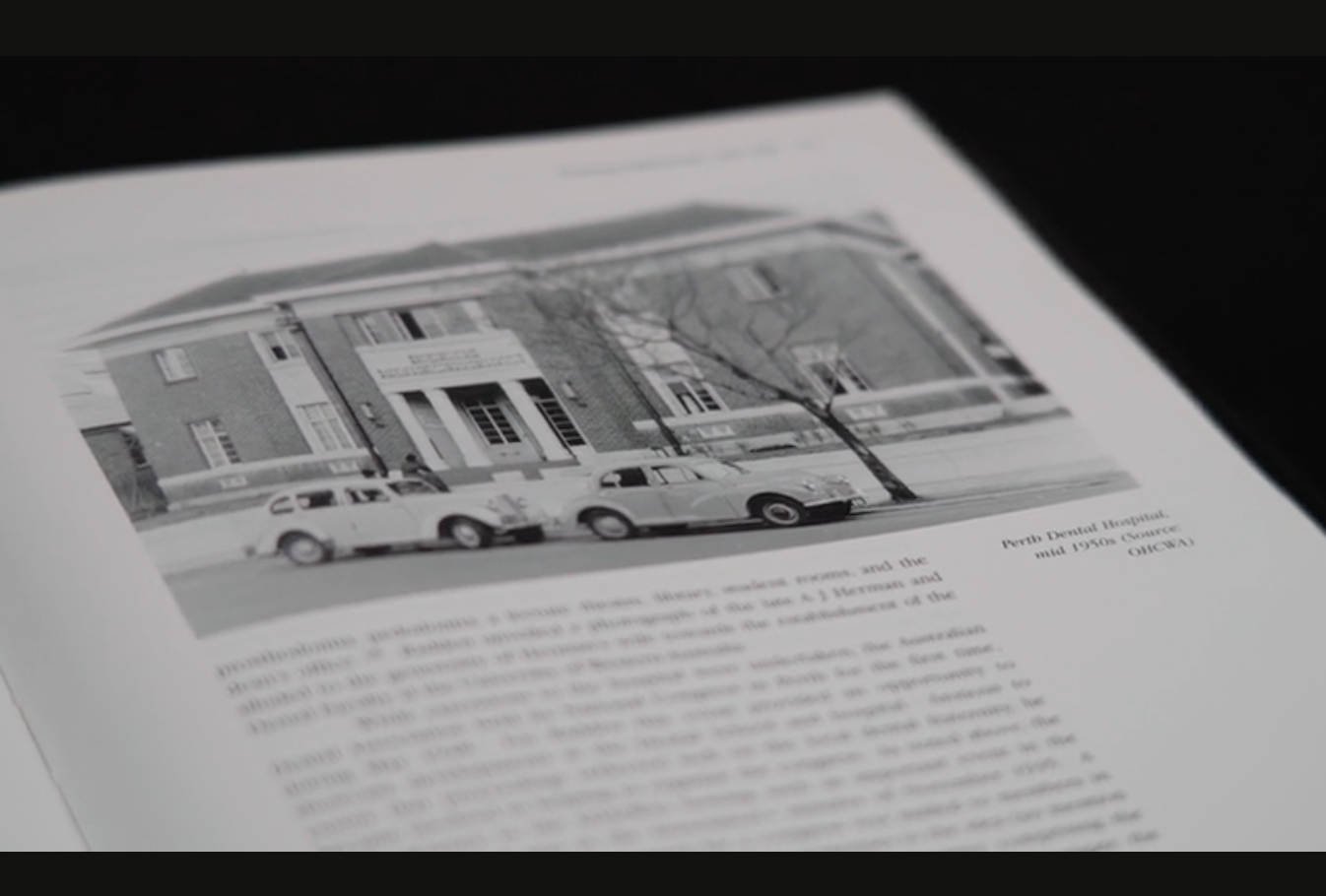
The Western Australian Dental Faculty was established in Perth back in 1950, and the new course that was created in this year provided students with a degree that replaced the previously offered diploma.
However, graduates of this program found they had no easy access to further learning opportunities. So it was that a group of five local Perth dentists recognised the opportunity, and the need, for a local Dental Study Group in Perth.
Inspired by the Dental Study Club of Brisbane (the first in Australia), they called a meeting in December, 1954 to form their own group. Twenty other interested dentists were named as Foundation members and a Constitution was proposed.
These new members invited Professor KJG Sutherland, the Dean of the new Faculty of Dental Science, to be Patron of the Group. The founding members included notable Dentists John McGibbon, Ron Rankine-Wilson, Ted Adler, Ray Owen and Ross Taylor.
From this first meeting, on the 9th of December 1954, the Dental Study Group of Western Australia was born. Membership was conditional on regular attendance at the meetings, as well as a willingness to contribute to the Scientific Programme and the open sharing of knowledge. Its purpose was “To be a common meeting place for both Specialists and General Practitioners with exchange of information and ideas, to stimulate reading, investigation, and discussion of various Dental topics”
The Programme for the Group’s first full calendar year – 1955 – was 10 General Meetings and one AGM.
The Group members were active in their own practices and many were involved in teaching at the Dental Faculty. A number of them also completed and published their own academic research projects.
For many years the Group had an annual study theme which was researched by members for a year or more. These included: Dental Trauma, Dental Needs of the Disabled, Oral Rehabilitation, and notably, Fluoridation. This in-depth study on Fluoridation was pivotal in Group members, and the Dental Association, campaigning together to have fluoridation introduced to Western Australia. In 1967, as a direct result of Group Members’ involvement, it was legislated.
The Study Group has been a powerful influence in the development of the Dental Profession in Western Australia, particularly in specialty areas. It is the conscious combination of Specialist and General Dental members that makes the Study Group so unique.
Today Australia has thirteen areas of recognised specialty practice. It’s hard to imagine that when the Study Group was formed there were only two specialties – Oral Surgery and Orthodontics – and only five specialists!
Dr. Ted Adler graduated in the very first Dental Faculty class at the University of Western Australia in 1950 and continuing with his master’s degree, he was the first person to complete a MDSC at UWA. His postgraduate career included immersive research and academic visits to overseas Universities and in 1982 both Dr Ted Adler and Dr Pat Henry became the first Australians to pioneer titanium implants after spending time with Professor Branemark in Sweden.
In 1957 the Group held its first Weekend Convention at UWA. This consisted of three days of lectures, which were so successful, the Weekend Conventions have continued annually ever since. They bind the Group and their families together as Group members attend lectures during the day, whilst spouses attended a social programme, followed by dinner for all. Recent Conventions have been in Kalgoorlie and on Rottnest Island, Busselton and Darwin, with members and their families all mingling together.
The 50th Anniversary celebrations of the Study Group, held 20 years ago, summed it up well; “The ethic of continuous study on which the Study Group was Founded has proven to be a powerful influence in the overall development of the dental profession in Western Australia, especially in the area of specialisation”
The Dental Study Group of Western Australia has quietly been in the background supporting the development of modern Dentistry in WA, and its members have been unwaveringly dedicated to their profession, giving of their time willingly to share their knowledge and forge a stronger path for those who follow. We hope that this tradition continues for many years to come.